Friday, May 20, 2011

Council of Dharmic Faiths Launched

A new UK faith body, The Council of Dharmic Faiths, has been launched at the House of Commons to represent Hinduism, Sikhism, Buddhism, Jainism, and Zoroastrianism.
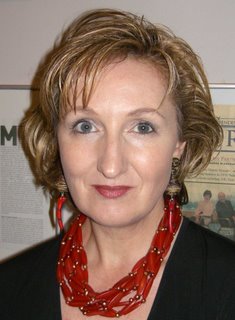
The event was hosted by Stephen Hammond MP, who spoke on how British Hindus, British Sikhs and other communities are flourishing in the UK in their respective faiths and how well they have integrated into the British culture. The launch was also supported by Gareth Thomas MP and John Hemmings MP.

Leaders from the each faith group recited a prayer and, together with the MPs lit lamps of wisdom. The launch ended with an display of Indian dance.

For more info see http://www.ritatrust.org/dialogue/1567-council-of-dharmic-faiths-launched-in-uk.html

Labels: , , , , , , , , , ,

Thursday, September 06, 2007

Religion and Nationalism

Last night I attended a fascinating talk on Religion and Nationalism at St Barnabus’ Church in Southfields, London. Dr Eric Kaufmann, a reader in Politics and Sociology at Birkbeck, University of London, took us on a swift tour of this complex subject, covering a range of conflicts from the medieval crusades to the Iraq war.

The big question, of course, was how far are so-called ‘religious’ wars in fact nationalistic, political campaigns and whether such wars are in any way more violent that ‘secular’ conflict? Inevitably, perhaps, the conclusion on both counts was that the distinction is far from clear cut. During question time after Dr Kaufmann’s talk for instance, there was serious, well-informed debate about whether Northern Ireland was really a Protestant –v- Catholic fight or whether those labels actually provided no useful indication whatsoever of actual religious adherence and depth of religious feeling, saying much more about place of birth, heritage and political affiliation.

Distinctions between religion and nationalism are hard to pinpoint, often because they are so personal – and irrational. This point was beautifully – or perhaps I should say horrifically – illustrated by the friend with whom I attended the lecture. She told the audience how her Croatian au pair, at the height of the Balkan war, recalled hiding in the cellar with her family while a mob outside called for the blood of her father, a Serb. “I listened to her story and, in my naivety,” said my friend, “asked why she and her family go back to Serbia to escape?” She replied: “Well, my family haven’t lived in Serbia for 400 years.”

Earlier, I had spotted a news story in the Times of India about a Hindu religious leader in South Africa who had caused a storm in his community by suggesting that Hindus who convert to Christianity and reject their religion will “lose their right to be Indian.” It seems a bizarre mix of religion and nationalism, yet not one that should really surprise us.

Even second and third generation immigrants in this country identify strongly with their original ‘homeland,’ while at the same time feeling British. They also understandably wish to practise the religion of their familial place of birth. I wonder whether my personal identity as a British Christian owes more to my upbringing within the native Methodist tradition, my subsequent connection with the Church of England and the worship, liturgy, art, music and heritage of Christianity in this country, or to the first century Palestinian New Testament?

It is probably the former, because were I to convert to Hinduism, Sikhism, Buddhism or Islam – even Judaism - I would of course still be British, but can’t help feeling that in converting I would lose some vital connection with my own land which it would be difficult to replace. Such hypothetical feelings are part of complex web of emotion and experience that it is not easy to explain, although I am clearly not alone in feeling it.

White Britons living in areas where there is a higher density of Muslims in the population are much more likely to identify themselves as Christian, said Dr Kaufmann, irrespective of whether or not they actually attend church or practice their faith. In theory, I guess that means that the potentially lethal blend of religion and nationalism becomes far more potent when the ‘home’ faith is in some way perceived to be under threat.

Labels: ,

Monday, July 16, 2007

Shambo's Astonishing Reprieve

Mr Justice Hickinbottom’s decision to grant a reprieve for Shambo, the sacred bullock currently in residence in his own purpose built shrine at the Skanda Vale temple in Wales is astonishing. Does it mean religious communities are henceforth to be granted rights over and above the secular law?

I certainly hope not. What chaos would result? It seems to me this Judgement only says that when Shambo tested positive in a routine tuberculosis test and the Welsh Assembly issued a standard notice to slaughter in accordance with standard agricultural practice, they failed as the outset to take sufficient account of the fact that Shambo is not a conventional farm animal. This meant they did not take account of whether public health concerns outweighed religious rights. The fact the Assembly claimed to have considered this subsequently probably cuts no mustard in legal circles. I sense this is more a matter of following correct legal procedure than anything else.

However, the question of whether and when the right to practise a religion as enshrined in European Human Rights law may or may not excuse one from following the law of the relevant land is a vital and important question, one that has such potentially dramatic consequences for us all and needs to be tested in the Courts as soon as possible.

So, we will all be watching to see what happens in the Appeal Court with interest. Whether it ends there is anyone’s guess – I suspect this one may well go all the way to the European Court itself.

Meanwhile, poor old Shambo stays on sacred death row, isolated from his fellow creatures and, it seems to me, not having much of a divine life at all, despite his luxurious surroundings.

Labels: , , ,

Tuesday, January 23, 2007

BA's Cross U-Turn

So BA has climbed down over its refusal to allow a check-in desk worker to wear a cross. Now, says the company, it will allow staff to wear religious symbols openly and give "some flexibility for individuals to wear a symbol of faith on a chain".

If BA thinks this is the end of the matter, I fear the company is very much mistaken.

When BA announced it would be reviewing its policy, back in November, I was deeply concerned about their apparent intention to allow staff to wear a religious symbol on their lapel badge.

In my experience, it is mostly conservative evangelical Christians who wear a cross or ICHTHUS fish on their lapel. While I am proud to wear a cross around my neck, as more than just a piece of jewellery, I would not choose to wear a lapel badge as I would not wish to labelled 'evangelical.'

So, personally, I would have dropped the lapel idea altogether and just stuck with allowing religious jewellery. A symbol on a chain around the neck is often ambiguous. If, for instance, you saw someone wearing a cross, or a five or six pointed star on a necklace, you might not immediately think it was a religious symbol. You almost certainly wouldn’t make an issue about it and ask the wearer for more details. A lapel badge on the other hand, is a clear, unambiguous symbol of faith, one that - unless you share the wearer's faith - automatically signals that they are ‘different’ to you.

This is why I sense trouble ahead. A Wiccan wearing a five-pointed star on her lapel meets a Christian wearing a cross on his. Are they going to meet each other in a neutral way? Or is religion going to get in the way of a good working relationship?

A current court case in the USA centres on a Wiccan ex-Starbucks barista, who claims she was asked on several occasions to remove the pentacle from around her neck, despite the fact her colleagues, including her Christian Manager, all wore crosses. She claims they also refused to promote or transfer her to another branch.

I fear it won’t be long before we see a similar case here. Evangelicals in all faiths often will not accept open proselytising by those of other faiths, too often refusing to afford them the rights they demand for themselves.

How long will it be before the complaints start, complaints that Satanists, Scientologists and other minority faith group members are wearing badges when ‘they shouldn’t be allowed to?’ How long before atheists start campaigning to be allowed to wear their own badges? No doubt Nadia Eweida would be horrified by the idea, yet all faith groups have equal rights under the Employment Equality (Religion and Belief) Regulations 2003.

I also wonder what BA will do to stop their believing employees sharing their faith when asked by customers what their lapel badges mean?

Nadia Eweida and her supporters clearly didn’t think this through before starting their campaign and neither, in consulting only with faith groups, and mainstream faith groups at that, has BA.

The fact remains; BA should have just ignored that tiny, ambiguous silver cross. As an innocent piece of jewellery that happened to have significance for her, no one but the BA bureaucrats batted an eyelid. As a visible, unambiguous symbol on a lapel, I fear a whole new can of worms has been opened.

Labels: , ,